Posts

The Magnificent Batu Caves of Malaysia

Image
On a laid back Sunday afternoon without traffic, once can reach this magnificent destination in 20 minutes from the KL city center. The Batu Cave temple complex rises almost 100 m above the ground and consists of three main caves and a few smaller ones. The biggest, referred to as Cathedral Cave or Temple Cave, has a 100 m-high ceiling and features ornate Hindu shrines. To reach it, visitors must climb a steep flight of 272 steps. My wife had no problems climbing the steps this time, as they were relatively "easier" compared to the Great Wall climb. The cave is located in Gombak district, 13 kilometers (8 mi) north of Kuala Lumpur, Malaysia. It takes its name from the Sungai Batu or Batu River, which flows past the hill. Batu Caves is also the name of the nearby village. The cave is one of the most popular Hindu shrines outside India, dedicated to Lord Murugan. It is the focal point of Hindu festival of Thaipusam in Malaysia. The limestone forming Batu Caves is said to be...

Forbidden City on Stamp

Image
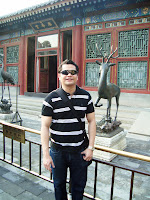
The Forbidden City was the Chinese imperial palace from the Ming Dynasty to the end of the Qing Dynasty. It is located in the middle of Beijing, China, and now houses the Palace Museum. For almost five hundred years, it served as the home of emperors and their households, as well as the ceremonial and political center of Chinese government. Built in 1406 to 1420, the complex consists of 980 buildings with 8,707 bays of rooms and covers 720,000 m2 (7,800,000 sq ft). The palace complex exemplifies traditional Chinese palatial architecture, and has influenced cultural and architectural developments in East Asia and elsewhere. The Forbidden City was declared a World Heritage Site in 1987, and is listed by UNESCO as the largest collection of preserved ancient wooden structures in the world. Since 1925, the Forbidden City has been under the charge of the Palace Museum, whose extensive collection of artwork and artifacts were built upon the imperial collections of the Ming and Qing dynast...

Tiananmen Square on Stamp

Image
Tiananmen Square is the largest city square in the world measuring 440,000 m² - 880m by 500m. It is located in the center of China's capital, Beijing, and named after the Tiananmen Gate, also called the Gate of Purification. This gate separates the Forbidden City from the Tiananmen Square. It has great cultural significance as it was the site of several important events in Chinese history. Outside China, the square is best known in recent memory as the focal point of the Tiananmen Square protests of 1989, a pro-democracy movement which ended on 4 June 1989 with the declaration of martial law in Beijing by the government and the death of hundreds, perhaps more, of protesters. When I visited Beijing, the Chinese nationals were not aware of the said massacre because media was banned from covering the event. Used as a massive meeting place since its creation, its flatness is contrasted by the 38-meter (125 ft) high Monument to the People's Heroes, and the Mausoleum of Mao Zedo...

The Tianjin Eye- The Ferris Wheel on a Bridge

Image
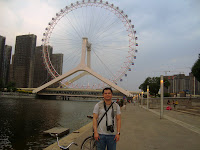
After a 30 minute ride via the South Beijing terminal super train (with speeds of 329km/hr), we arrived at the picturesque Northern city of Tianjin, China. Its main attractions include the Ancient Culture Street, the Tianjin and Boxer Rebellion Museum, Jinwan Square and the Tianjin eye.    The Tianjin Eye is a 120-metre (390 ft) tall giant Ferris wheel built above the Yongle Bridge (formerly Chihai Bridge), over the Hai River in Tianjin, China. It is the only Ferris wheel in the world to have been constructed over a bridge.    Construction started in 2007, with completion of the main body on 18 December 2007, and the wheel opened to the public on 7 April 2008. At the time of completion, only the 135 m (443 ft) London Eye, 160 m (520 ft) Star of Nanchang, and 165 m (541 ft) Singapore Flyer were taller. Tianjin Eye is on e of four 120 m Ferris wheels in China, the other three being Changsha Ferris Wheel (completed 2004), Suzhou Ferris Wheel (completed 2009), and Z...

The Historic Center of Macau

Image
The Historic Center of Macau is a collection of over twenty locations that witness the unique assimilation and co-existence of Chinese and Portuguese cultures in Macau, a former Portuguese colony. It represents the The Historic Center of Macau architectural legacies of the city's cultural heritage, including monuments such as urban squares, streets-capes, churches and temples. In 2005 the Historic Center of Macau was inscribed on the UNESCO World Heritage List, making it the 31st designated World Heritage site in China. It was described by UNESCO as: "with its historic street, residential, religious and public Portuguese and Chinese buildings, the historic centre of Macao provides a unique testimony to the meeting of aesthetic, cultural, architectural and technological influences from East and West," and "...it bears witness to one of the earliest and longest-lasting encounters between China and the West, based on the vibrancy of international trade." Most of th...

Beijing's Summer Palace

Image
The Summer Palace literally means "Gardens of Nurtured Harmony" is a palace in Beijing, China. The Summer Palace is mainly dominated by Longevity Hill (60 meters high) and the Kunming Lake. It covers an expanse of 2.9 square kilometers, three quarters of which is water. The central Kunming Lake covering 2.2 square kilometers was entirely man made and the excavated soil was used to build Longevity Hill. In the Summer Palace, one finds a variety of palaces, gardens, and other classical-style architectural structures. The Summer Palace started out life as the Garden of Clear Ripples in 1750 (Reign Year 15 of Qianlong Emperor). Artisans reprodu ced the garden architecture styles of various palaces in China. Kunming Lake was created by extending an existing body of water to imitate the West Lake in Hangzhou . The palace complex suffered two major attacks—during the Anglo-French allied invasion of 1860 (with the Old Summer Palace also ransacked at the same time), and during the ...

The Durbar Square in Kathmandu

Image
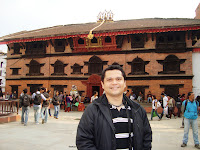
Kathmandu Durbar Square is the plaza opposite the old royal palace in the three main cities in the Kathmandu Valley in Nepal: Kathmandu, Patan and Bhaktapur. The square is filled with temples, and is a UNESCO World Heritage Site. The Durbar square is surrounded by spectacular architecture and vividly showcases the skills of the Newari artists and craftsmen over several centuries. The royal palace was originally situated at Dattaraya square and was only later moved to the Durbar square location. The Kathmandu Durbar Square holds the palaces of the Malla and Shah kings who ruled over the city. Along with these palaces, the square also surrounds quadrangles revealing courtyards and temples. The square is presently known as Hanuman Dhoka, a name derived from the statue of Hanuman, the monkey devotee of Lord Ram, near the entrance of the palace. The preference for the construction of royal palaces at this site dates back to as early as the Licchavi period in the third century. Even though...