Posts

Korean Anthem Composer in Meter Cover

Image
The National anthem of South Korea is called 'Aegukga' which literally means "The Song of Love for the Country". Even though Aegukga is sung as the national anthem, the song has not yet achieved official status. The music of the National anthem of South Korea was composed by Ahn Eaktay but there is no surety about who actually wrote the lyrics of the anthem. Some believe that the lyrics were written either by Yun Chiho, a politician or by An Chang-Ho, pro-independence leader and educator. The original lyrics of the national anthem was probably written around 1907 in order to boost a spirit of loyalty and independence, as the nation encountered threats of foreign assault. Over the years, the lyrics have been revised by various leaders and evolved into what is sung today. Initially the anthem was sung to the tune of the Scottish folk song, Auld Lang Syne, taught by the American missionaries. However, a Korean composer named Ahn Eak-Tai considered it inappropriate to u...
"Jerusalem of Gold"

Image
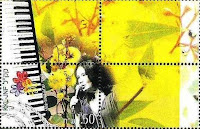
Naomi Shemer (1930-2004) - the most readily identified artist in the world of Israeli music following the establishment of the State. She wrote and composed hundreds of songs that became Israeli classics thanks to her wonderful integration of words and melodies. Her most famous song - " Jerusalem of Gold " - has become, in fact, a second "National Anthem" in Israel. Jerusalem of Gold" (Yerushalayim Shel Zahav) was written by Naomi Shemer in 1967. The original song described the Jewish people's 2000-year longing to return to Jerusalem; Shemer added a final verse after the Six-Day War to celebrate Jerusalem's unification under Israeli control. Naomi Shemer wrote the original song for the Israeli Music Festival on 15 May 1967, th e night after Israel's nineteenth Independence Day. She chose the then-unknown Shuli Nathan to sing the song. At that time, the Old City was under Jordanian rule; Jews had been barred from entering, and many holy sites had be...

"God Bless America", America's Unofficial Anthem

Image
With this 2010 stamp, the U.S. Postal Service honors Kate Smith , the celebrated singer and entertainer whose signature song, “ God Bless America ” (composed by Irving Berlin), has been called America´s unofficial national anthem. The stamp art duplicates artwork created for the cover of a CD titled “Kate Smith: The Songbird of the South.” The artwork was based on a photograph of Smith taken in the 1960s. Berlin originally wrote the song in 1918 while serving in the U.S. Army at Camp Upton in Yaphank, New York, but decided that it did not fit in a revue called Yip Yip Yaphank, so he set it aside. The lyrics at that time included the line, "Make her victorious on land and foam, God bless America..." as well as "Stand beside her and guide her, to the right with the light from above." Music critic Jody Rosen comments that a 1906 Jewish dialect novelty song, "When Mose with His Nose Leads the Band", contains a six-note fragment that is "instantly recogniz...

Jenneval- Belgian Anthem Lyricist

Image
Louis Alexandre Dechet (Lyon, 20 January 1801 - Lier, 18 October 1830) was a French actor and is known as author of the text of the Brabançonne , the Belgian national anthem. His pseudonym was Jenneval , possibly named after the drama Jenneval, ou le Barnevelt français (1769) of Louis Sébastien Mercier. Dechet worked in Ajaccio, Marseille and in 1826 at the Paris Odéon. Via Rijsel he finally came to Brussels, where he played at La Monnaie. In 1828 he returned to Paris in order to work at the Comédie Française, but returned to Brussels immediately after the July Revolution in 1830. He there served with the city guard which was responsible for maintaining law and order. Dechet is said to have written the text of the Brabançonne during the first revolutionary gatherings at the café "L'Aigle d'Or" in the Brussels Greepstraat in August of 1830, shortly after the performance of the opera La Muette de Portici, which triggered the Belgian revolution. During the Belgian Revol...

Hymn to Liberty- The Longest National Anthem in the World

Image
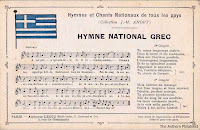
The Hymn to Liberty (Ýmnos is tīn Eleftherian) is a poem written by Dionýsios Solomós in 1823 that consists of 158 stanzas and is the longest national anthem in the world, set to music by Nikolaos Mantzaros . In 1865, the first two stanzas officially became the national anthem of Greece and later also that of the Republic of Cyprus . According to the Constitution of Cyprus, the Greek national anthem is used in the presence of the Greek Cypriot president (or other Greek Cypriot), and the Turkish national anthem is used in the presence of the Turkish Cypriot vice-president. Cyprus stopped using the Turkish national anthem, however, when Turkish Cypriots broke away from the Government in 1963. Hymn to Liberty was also the Greek Royal Anthem (since 1864). The hymn was set to music in 1865 by the Corfiot operatic composer Nikolaos Mantzaros, who composed two choral versions, a long one for the whole poem and a short one for the first two stanzas; the latter is the one adopted as the Nati...

The National Anthem of Australia

Image
A prolific composer, Scottish-born Peter Dodds McCormick was moved to compose a national anthem for Australia when, having attended a concert of the world's anthems, there was no anthem for Australia. His original lyrics heavily emphasized Australia's ties to Britain (as Australia was a British colony at the time). Upon Australia's inauguration as a separate Commonwealth on January 1, 1901, the song was performed, but the British " God Save the Queen " was still the official anthem of Australia. At this time, the third verse of McCormick's original work was changed. While " Advance Australia Fair " remained popular with the people in the decades following, no official national anthem other than "God Save the Queen" was declared. In 1974 the Australian Bureau of Statistics conducted a national opinion poll of 60,000 and in 1977 a plebiscite for a national song was conducted. On each occasion, Advance Australia Fair was the preferred option ...

National Anthem of Manchukuo Empire

Image
The Manchu State (Manchukuo, Manshūkoku) was a puppet state in Manchuria and eastern Inner Mongolia. The region was the historical homeland of the Manchus, who founded the Qing Dynasty of China. In 1931, the region was seized by Japan following the Mukden Incident and in 1932, a puppet government was created, with Puyi, the last Qing emperor, installed as the nominal regent and emperor. In 1934, Manchukuo became an empire ("The Great Manchu Empire") and the new emporer, Henry Puyi (it was under his reign in China that the "Gong Jin'ou" anthem was written) comissioned a new anthem, " Mǎnzhōu dìguó guógē " (National Anthem of Manchukuo Empire) to be written by Zheng Xiao-xun , the same person who wrote the previous Manchurian anthem. The Japanese wished for the anthem to be translated into Japanese, so that both Chinese and Japanese could sing the anthem, but Zheng died in 1938. The new anthem was eventually adopted in 1942 and was in use until 1945. Th...